Insight
PCI compliance higher education: many merchants, one plan
PCI compliance higher education programmes face a special problem: one institution often runs dozens of separate merchants. So coordination matters as much as any single control.
- Not a QSA, stated first
- Introductions to independent QSAs
- Written answers, no call
Why PCI compliance higher education is different
Card payments appear all over a campus. For example, the bookstore, parking, events, donations and summer programmes may each take cards.
Also, departments often choose their own tools. Therefore central teams may not know every payment channel exists.
Building a PCI compliance higher education inventory
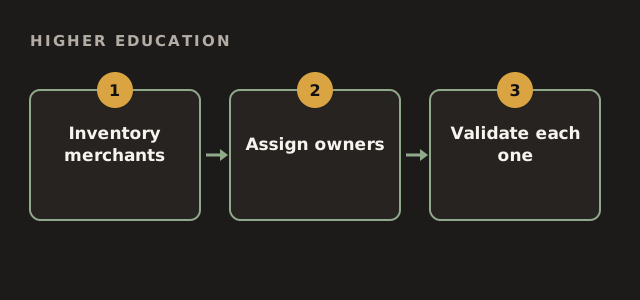
Start by listing every merchant account and channel. However, ask departments directly, because bank records alone miss some tools.
| Area | Typical channel |
|---|---|
| Bookstore and dining | Terminals at counters |
| Events and athletics | Online ticketing providers |
| Advancement | Online donation forms |
| Continuing education | Third-party registration systems |
PCI compliance higher education check
Tick what your institution has in place.
Your result appears here as you tick, so you can see what is still open.
Governance for PCI compliance higher education
Many institutions form a small PCI committee. It sets policy, approves new payment tools and tracks each merchant's questionnaire. As a result, nobody adds a channel without review.
- A named owner for each merchant account
- Central approval for new payment tools
- One calendar for annual validation
- Shared training for staff who take cards
Where card data hides on campus
Paper forms and emailed registrations are common. Also, spreadsheets of donor details sometimes contain card numbers. So discovery should include offices, not only systems.
In addition, check vendor contracts, because many campus tools are run by third parties.
Where Winslow helps
We build the inventory, governance model and readiness plan. We are not a QSA, so we prepare and introduce independent assessors when needed. Gap analysis generally runs $8,000 to $40,000. Standards are in the PCI SSC document library.
Also plan for turnover. Student workers and temporary event staff change every term, so training must be quick and repeated. In addition, keep a simple handover note for each merchant, because owners move roles too. As a result, the programme survives staff changes rather than restarting each year.
PCI compliance higher education questions
Who owns PCI compliance higher education programmes?
Usually a central committee, with a named owner for each merchant account.
Does each department need its own questionnaire?
Often each merchant account validates separately, depending on your acquirer.
Where does PCI compliance higher education usually fail?
In forgotten channels, such as paper forms or a department's own online tool.
Do student systems fall in scope?
Only if they store, process or transmit card data, or affect its security.
Related guides
Organise PCI compliance higher education across campus
Tell us how many merchant accounts you think you have. We reply in writing, usually within one business day.
Ask us anything